
The first command of the Book of Revelation is to “behold.” Revelation 1:7 reads, “Behold, he is coming with the clouds, and every eye will see him, even those who pierced him, and all tribes of the earth will wail on account of him. Even so. Amen.” The command is the word Behold, which means to see, grasp, know, and live in the reality of the coming of Jesus. The command to behold is also the same command that is at the end of the Gospel of Matthew; “Behold, I am with you always, to the end of the age (Matthew 28:20).” We are to see and know and live in the reality of Jesus present with us. We believe this is so through the power and gift of God’s Spirit.
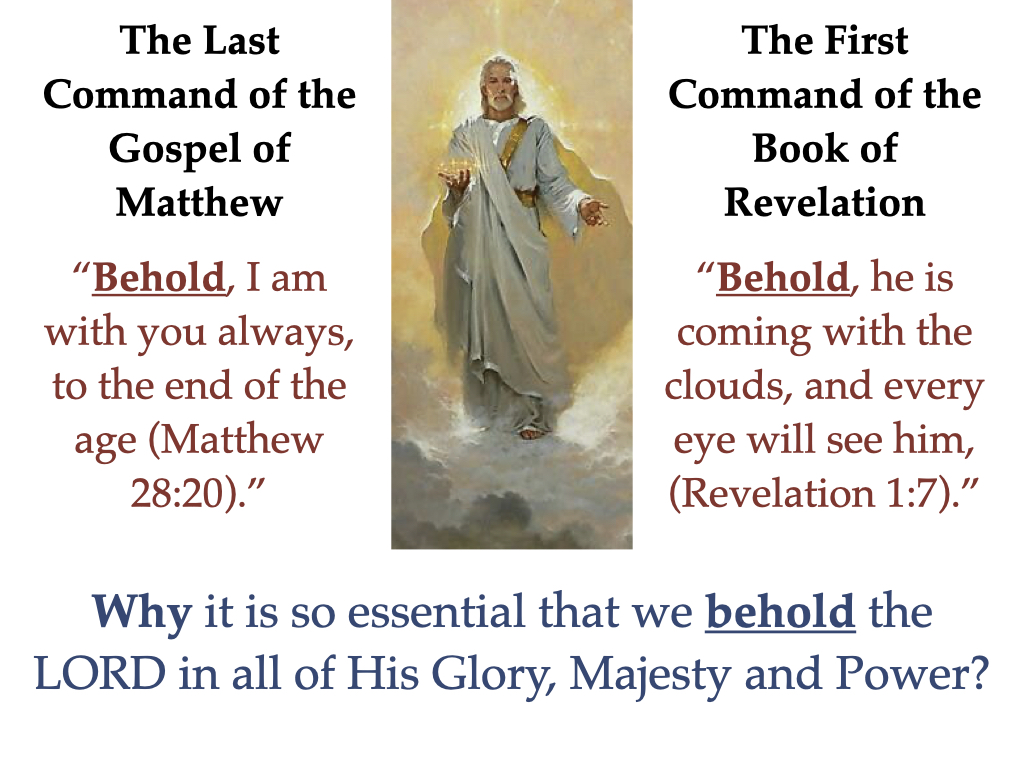
The question I would like to ask today is, “Why?” Why it is so essential that we behold the Lord in all of his Glory, majesty, and power. Our scripture today is Revelation 1:9-20. I plan first to explain the basic meaning of John’s vision and the truth that it reveals. Then, I will come back to the importance of Beholding the Glory of the Lord. Reading from Revelation 1:9–20, “9 I, John, your brother and partner in the tribulation and the kingdom and the patient endurance that are in Jesus, was on the island called Patmos on account of the word of God and the testimony of Jesus. 10 I was in the Spirit on the Lord’s day, and I heard behind me a loud voice like a trumpet.”
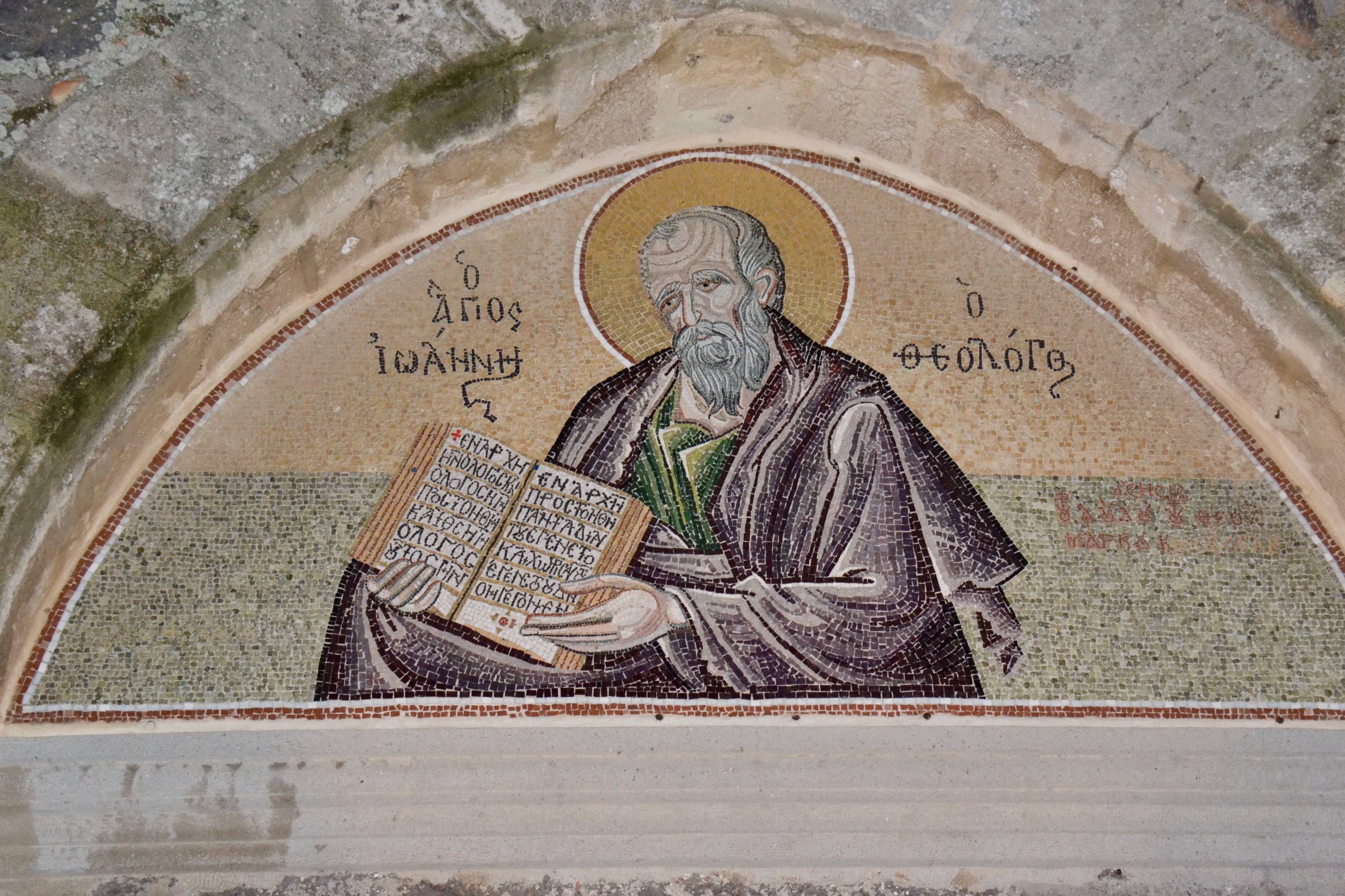
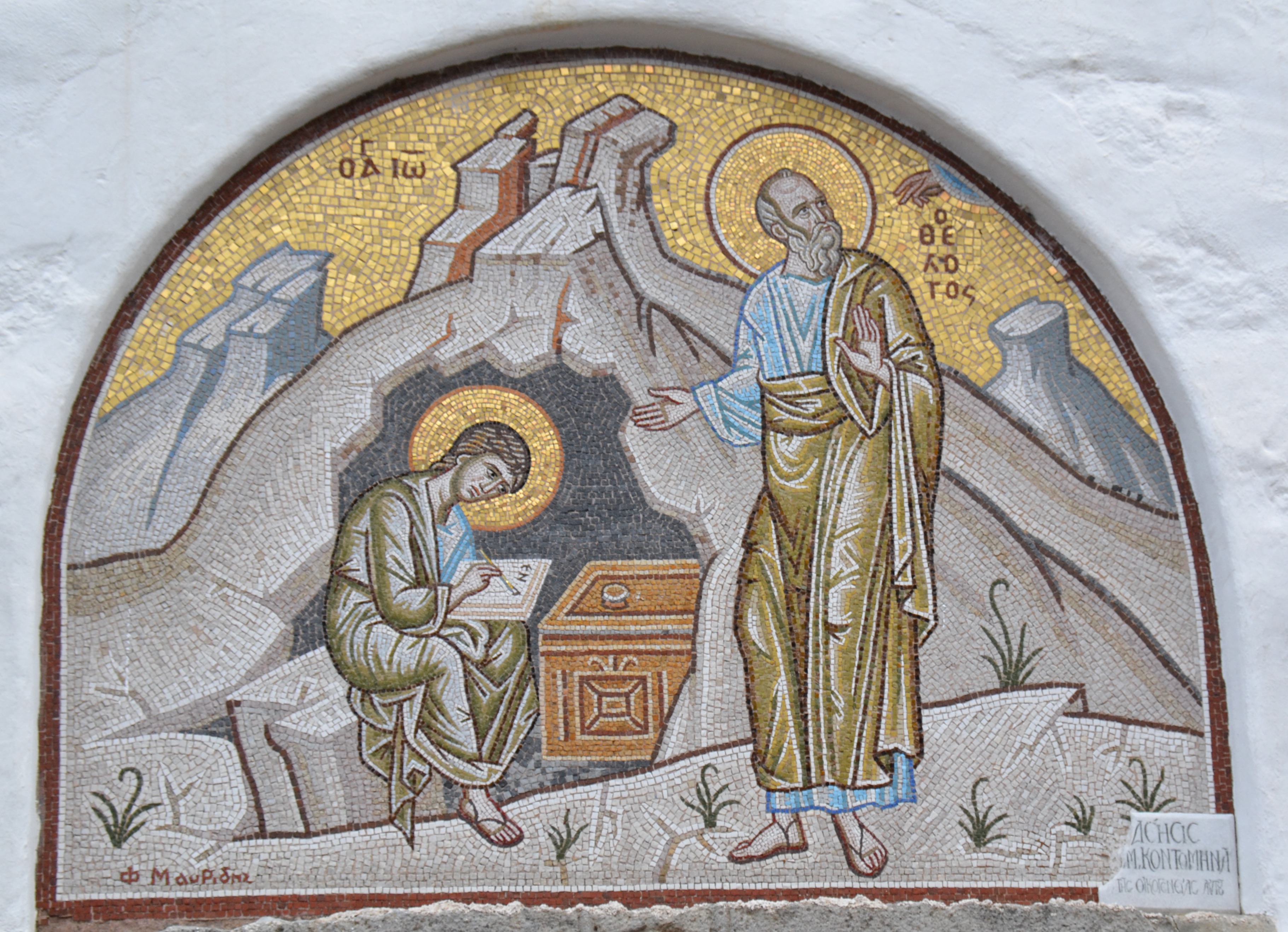
I want to pause here briefly to talk about John, the author of this book. I believe this to be John the Apostle…the same John who wrote the book known as the Gospel of John. I think it is worth noting that John would often refer to himself as “the disciple that Jesus loved” in the Gospel of John. Just one example, after the resurrection, the disciples are fishing, and they see Jesus. John 21:7 reads, “That disciple whom Jesus loved, therefore said to Peter, “It is the Lord!” That is how John talked about himself—“I am a person who is loved by Jesus.” I do not think that John thought that Jesus loved him more than the other disciples, but that being loved by Jesus was John’s identity. Who are you? I am the beloved. Now notice how he identifies himself in the book of Revelation. John identifies himself as a person who is a brother and partner to all other Christians. “I, John, your brother and partner in the tribulation (the word tribulation means trouble, oppression or suffering) and the kingdom and the patient endurance that are in Jesus.” John is saying that in our faith, you are just like me, and I am just like you. We share the same suffering, the same promises and blessings, and the same hope.
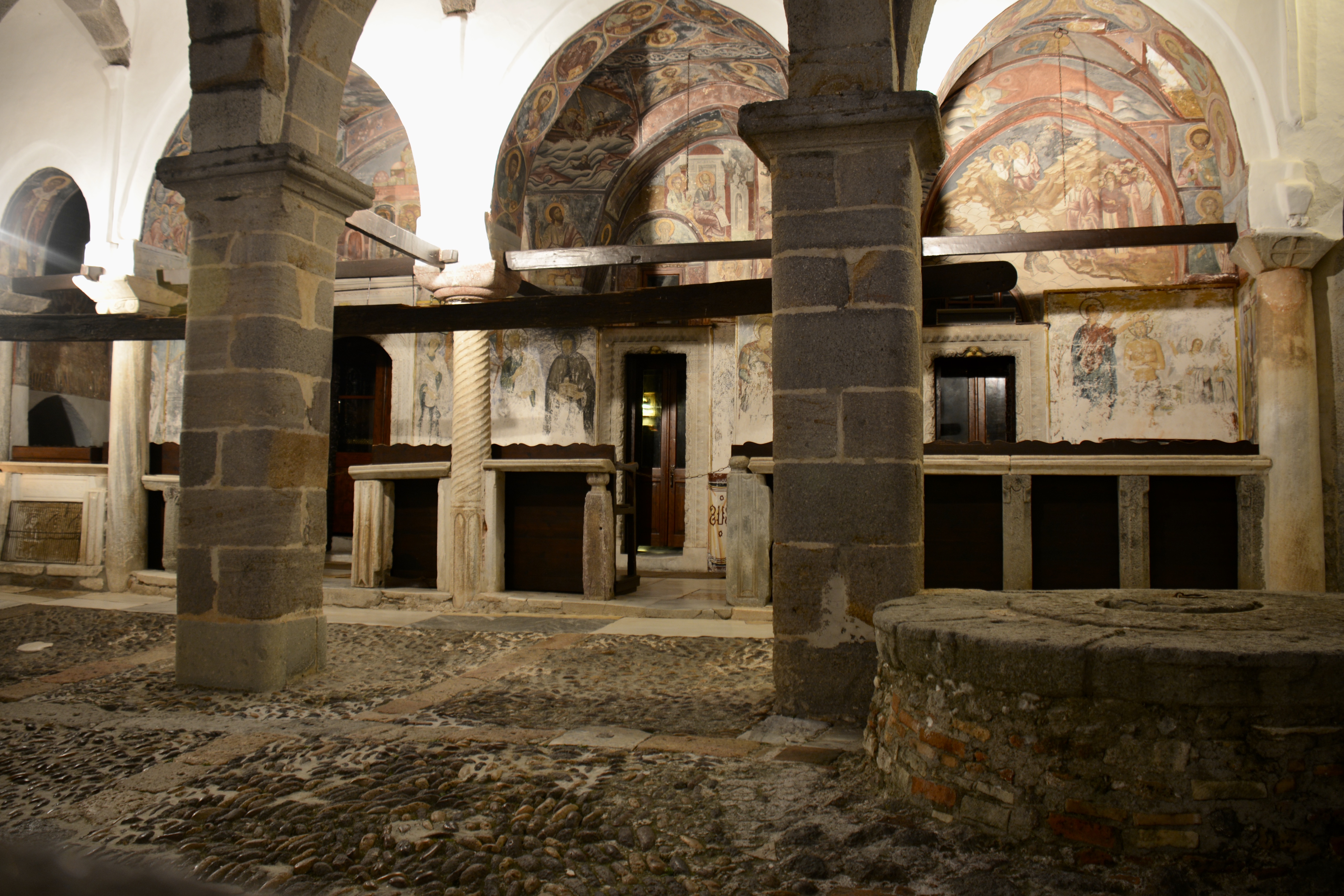
John also tells us in verse 9 that he was on the island called Patmos on account of Jesus. I have been to the island of Patmos twice. It is one of my life’s highlights. The island is not much more than a big rock. It is roughly the shape of a hook, approximately 12 miles in length, and about 5 miles at the place of the turn. Church tradition says that John was sent there because he refused to offer sacrifice to Emperor Domitian. I will share more about John when we talk about the church of Ephesus. We read in verse 10 that on the Lord’s day, John was in the Spirit when he received this revelation from the Lord. When scripture says that John was in the Spirit, to me, that means that he was enjoying a deep communion and fellowship with the Lord. And it is here in this deep fellowship with God that God speaks to him. I am reading now from Revelation 1:11, “11 saying, “Write what you see in a book and send it to the seven churches, to Ephesus and to Smyrna and to Pergamum and to Thyatira and to Sardis and to Philadelphia and to Laodicea.” 12 Then I turned to see the voice that was speaking to me, and on turning I saw seven golden lampstands, 13 and in the midst of the lampstands one like a son of man, clothed with a long robe and with a golden sash around his chest. 14 The hairs of his head were white, like white wool, like snow. His eyes were like a flame of fire, 15 his feet were like burnished bronze, refined in a furnace, and his voice was like the roar of many waters. 16 In his right hand he held seven stars, from his mouth came a sharp two-edged sword, and his face was like the sun shining in full strength. 17 When I saw him, I fell at his feet as though dead. But he laid his right hand on me, saying, “Fear not, I am the first and the last, 18 and the living one. I died, and behold I am alive forevermore, and I have the keys of Death and Hades. 19 Write therefore the things that you have seen, those that are and those that are to take place after this. 20 As for the mystery of the seven stars that you saw in my right hand, and the seven golden lampstands, the seven stars are the angels of the seven churches, and the seven lampstands are the seven churches.” This is the Word of God.
In the book of Revelation, we are not always told what the symbols or images mean, but we are told here. Verse 20 tells us that the stars in the glorified Lord’s hand are the angels of the seven churches and the seven lampstands are the seven churches. I believe we are given the meaning of these symbols because it is critical that we understand this image that John sees. Also, I think that the likelihood of people’s understanding this image’s meaning without being told is very small.

The Lampstands: In the Old Testament and Judaism today, possibly the most important symbol is the seven lampstands known as the menorah. The seven lampstands are first seen in the Bible when God instructs Moses to make a lampstand of seven lamps, “You shall make seven lamps for it. And the lamps shall be set up so as to give light on the space in front of it (Exodus 25:37).” These seven lamps are placed in the temple and tended by the priest so that the lights never go out. When the temple is destroyed in 586 BC by the Babylonians, the lampstand of seven lamps becomes the symbol or image of the temple and God’s presence among his people. This is most clearly seen in Zechariah 4 when Zechariah, in a vision, sees seven lamps being tended by olive trees on either side, trees that in Zechariah represent the office of King and Priest. This vision of Zechariah, when the Exiles were returning to rebuild the temple, was a great encouragement to the people.

In our passage today, I think John sees the same vision, but instead of two olive trees that represent the office of priest and king tending or supplying the lamps, he sees the King of Kings and the Great High Priest in the midst of the lamps, tending them, supplying them. And thus, the shocker, we are told in verse 20 of Revelation 1 that these seven lamps do not represent Israel (which is what people are expecting to hear), but that these lampstands represent the church. This means that the church, the community of people who believe upon Jesus Christ are, as it says in Galatians 3:29, “If you are Christ’s, then you are Abraham’s offspring, heirs according to promise.” Or, as John says in the Gospel of John 1:12-13, “12 But to all who did receive him, who believed in his name, he gave the right to become children of God, 13 who were born, not of blood nor of the will of the flesh nor of the will of man, but of God (John 1:11-13).”
By identifying these seven lamps as seven churches, the word of God is saying that the church is the temple of the Lord where God’s presence dwells in the midst of this world. Not the nation Israel. Not the temple mount, but the church. The Lord is in our midst, He is among us, and we are a kingdom of priests, as it reads in verse 6 of Revelation 1. And this number 7, the seven churches, is significant for us. The number 7 is a symbolic number meaning full, or whole, or complete. Thus, the seven churches talked about here in Revelation means the whole church, the universal church, the entire body of Christ geographically in every nation and every tribe, and the whole church temporally, throughout time. It means that we, New Baptist Church of Huntington, West Virginia, are one of the lamps that Jesus tends as He walks in our midst. And that we, this church, is a temple where God’s presence resides for this world. Amen and Hallelujah.
John now describes the glorified Lord in verses 13 through 16. His description is the most exalted image given of Jesus Christ, our Lord, and King. And I believe the description of our Glorified Lord reflects his excellencies, the characteristics by which he is God. We read in verse 13, “and in the midst of the lampstands one like a son of man.” This phrase, son of man, is the favorite way that Jesus talked of himself. You may think this was about his humanity; it is not; it is about his divinity. The phrase Son of Man comes from Daniel 7, which speaks of the coming Messiah who shall receive an everlasting Kingdom and dominion. Thus, Jesus here in Revelation is described in his Glory as the King of Kings. And reading on in verse 13, Jesus is also described as the great High Priest by the garments he wears, “clothed with a long robe and with a golden sash around his chest.” These are the garments of the priest. Jesus is the king of kings, and he is the great high priest who takes away the sins of the world.

Looking at verse 14, we see characteristics of the glorified Lord that speak to his omniscience; “14 The hairs of his head were white, like white wool, like snow. His eyes were like a flame of fire.” When I read that verse, I am reminded of Psalm 139 that says nothing is hidden from God. Reading from Psalm 139:11 it says, “11 If I say, “Surely the darkness shall cover me, and the light about me be night,” 12 even the darkness is not dark to you; the night is bright as the day, for darkness is as light with you.” His eyes are flames of fire, which means there is no darkness that is dark to him. His gaze lights everything up; he sees everything, and he is wise and knows all. Back to Revelation: Verse 15 speaks of his purity and holiness; “His feet were like burnished bronze, refined in a furnace,” Throughout Scripture, the image of a refiner’s fire is used to describe something pure and holy, and this is Jesus. He is without sin; he is holy, pure and good. Jesus is innocent and righteous.
At the end of verse 15 and into verse 16, we catch a glimpse of his almighty power; “His voice was like the roar of many waters. 16 In his right hand he held seven stars from his mouth came a sharp two-edged sword, and his face was like the sun shining in full strength.” Verse 20 tells us that these seven stars are the seven churches’ angels, but I also think they represent all stars in the heavens. It is an image of Jesus, by His power, holding all of creation in his hand. And the sword that comes out of his mouth is the power of his word. A word so powerful that what he speaks, it becomes. “In the beginning was the Word, and the Word was with God, and the Word was God. He was in the beginning with God. All things were made through him, and without him was not anything made that was made (John 1:1–3).” This is the glorified Lord that John sees. In the glorified Lord, he sees the king of kings, the great high priest, the omniscient one who is wise and knows all, the holy one of God who is without sin, and the word of God through which all things are made and have their being. It is no wonder that John falls down as though dead (verse 17).
Behold the Glory: Throughout the Bible, we are given glimpses of the glorified Lord. Sometimes that glimpse is a pillar of fire as in Genesis 15 when God enters into a covenant with Abraham, or when the Lord went before the Israelites in the wilderness. Sometimes the Glory of the Lord is simply a light called the shekinah glory that filled the temple as seen at the end of Exodus. Sometimes when people were given glimpses of the Glory of God, it was a little bit more, like when Isaiah sees the corner of His robe.

One of the things that always happens when a person beholds the Glory of God is that they are changed. Abraham is changed and becomes a father; Moses is changed from being a person who did not want to be sent to a person who would rather die if God’s presence left. Jeremiah is changed with a spirit of endurance; Ezekiel and Daniel are changed as well. Possibly the best-documented change of a person who encountered the Glory of God is Paul. On the road to Damascus, he encountered the glorified and resurrected Lord, and his entire life was turned upside down. Thus, here is a spiritual truth I want to voice and highlight. Seeing, beholding, the Glory of the LORD changes a person. Beholding the Lord of Glory is a catalyst of change and transformation.
This spiritual truth should not surprise us. We know that we (all human beings) are impacted and changed by what we see or experience. In recent years, we have become more and more aware of what is often called PTSD. Post-Traumatic Stress Disorder was first recognized in military soldiers who witnessed the horrors of war but is now recognized as a disorder that can happen to anyone who witnesses or experiences a traumatic event like a car accident, physical or sexual abuse, assault, or a dangerous encounter with an animal. PTSD is a serious mental condition that causes anxiety, anger, and struggles of concentration.
If we accept that people who witness or go through a traumatic event are changed negatively, would that not then mean that people who witness something beautiful and glorious are changed positively? Do you think it is possible to catch a glimpse of something so wonderful, so beautiful, to truly awesome and glorious that you are changed forever? I believe so. In truth, I believe that encountering the Glory of God is HOW we are made whole, transformed, and changed to be like Christ. The world says that you are changed through the hard work of self-improvement. The world says the control you place upon yourself through rules and laws and self-discipline will result in a better you.

But what if, what if, the world is wrong? What if a person is changed, really changed, really healed and made whole and transformed not through the law or rules of self-control but through beholding the Glory of the Lord? The answer would be that the beautiful life is the one turned toward the Glory of God instead of the one turned toward the works of self-righteousness. You are made beautiful by beholding the Glory of God. We are told this in scripture, “18 And we all with unveiled face, beholding the Glory of the Lord,are being transformed into the same image from one degree of Glory to another. For this comes from the Lord who is the Spirit.” (2 Corinthians 3:18).” Seeing is becoming.
I am struck by the beauty that is promised when we behold the Glory of the Lord. We are being transformed, little by little, and over the course of a life, into the same image. What image is this? It is the image of the glorified Lord. It is the image of what we see in our Revelation passage today. The image of the Lord who is;
- The king of kings,
- The great high priest,
- Wise, and knowing, full of discernment,
- Purified by the refiner’s fire, infinitely holy and infinitely good,
- So powerful that he holds the universe in his hands, and by his word, all things spring into creation.
In scripture, we are told that as you behold him, you become like him from one degree to another. Seeing is becoming.
- Do you want a greater purpose in your life? Behold the Glory of the Lord
- Do you seek to care for people, to love better? Behold the Glory of the Lord
- Do you desire to be wise, able to discern what is good and true? Behold the Glory of the Lord.
- Do you seek to push back against temptation and the struggle with sin? Behold the Glory of the Lord.
- Do you desire to get out of that hole of depression and find the strength to do what is good and right? Behold the Glory of the Lord.
Seeing is becoming. Open up the eyes of your heart and behold His Glory, and so be changed and transformed into His likeness.
You may be thinking to yourself, where is this Glory? I have never seen the Glory of God. God has never appeared to me in Glory. Reading on in 2 Corinthians, in just a few verses later in chapter 4, Paul says that God shines the Glory of Christ into your heart through the gospel. (2 Corinthians 4:6 “For God, who said, “Let light shine out of darkness,” has shone in our hearts to give the light of the knowledge of the Glory of God in the face of Jesus Christ.”) Paul saw the Glory of Christ with his eyes on the road to Damascus, but we see the Glory of Christ in the gospel. The gospel is how God shines the Glory of Christ into our lives. So how do you behold the Glory of the Lord? You hang onto the gospel, you preach yourself the gospel, you read the gospel, you practice the gospel. As you behold the gospel through faith, trusting in God’s Spirit, God shines the Glory of Christ into your heart.
Are you being transformed from one degree of Glory to another? If not, I wonder what you are beholding. If seeing is becoming, what are you seeing? What are you beholding? Your greatest need, mine as well, is to radiate the beauty of Christ that comes from beholding him. Behold the Glory of the Lord.
We come to the end of our passage. John falls down as though dead, “17 When I saw him, I fell at his feet as though dead. But he laid his right hand on me, saying, “Fear not, I am the first and the last, 18 and the living one. I died, and behold I am alive forevermore, and I have the keys of Death and Hades (Revelation 1:17-18).” Jesus, the glorified Lord lays his hand on John and says to him, and he says to you, “Fear not.” You don’t have to be afraid. Persecution, the future, tomorrow, the pressures that you are under, the disappointments you hold; you do not have to be frightened. Because Jesus holds all authority; in his hand, he holds all the stars of heaven. By his word, all of creation came into being. He has overcome death and is alive forevermore. And in his hand, he holds the keys of death and hell, which means that he is the way, and the truth and the life. No one comes to the Father except through him. Therefore, fear not. Amen.
Preached by Pastor Trent Eastman on September 27, 2020 at New Baptist Church




 Concerning the Word of Life